How to Choose an AI Consultant for Your Small Business
Drafted with AI assistance and reviewed before publishing.
The right AI consultant for a small business is someone who can name a specific workflow to fix before they pitch any technology, works at a price point built for teams under 20 people, and leaves you with something your team can actually maintain. The wrong one sells a vision, disappears after delivery, and leaves you with a system nobody knows how to operate. Knowing which is which before you hire saves time, money, and the frustration of starting over.
Why Does Choosing the Right AI Consultant Matter More Now?
AI adoption among small businesses has accelerated sharply. According to a 2025 Thryv survey of 540 small business owners, AI usage among businesses with 1 to 100 employees grew from 39 percent in 2024 to 55 percent in 2025. As adoption spreads, so does the supply of people calling themselves AI consultants. Not all of them have the same experience level, and not all of them have worked with companies at your scale.
The AI consulting services market itself is growing fast: valued at around $8.75 billion in 2024 and projected to reach $49 billion by 2032, according to SNS Insider research cited by Yahoo Finance. That growth is attracting a lot of new entrants into consulting who have credentials on paper but limited delivery experience.
For small businesses, the stakes of a poor hire are proportionally larger than for large organizations. A $30,000 AI implementation that fails costs a two-person agency differently than it costs a hundred-person firm. The criteria below are designed specifically for organizations where that kind of decision matters.
What Should You Look for in an AI Consultant?
Most small business owners evaluate consultants on credentials and enthusiasm. Those are the wrong filters. The right filters are specificity and fit.
- They name a workflow before they name a tool. A consultant worth hiring asks about your operations before recommending any software. If the first conversation is dominated by tool names and product demos, they are selling a solution in search of a problem.
- They have case studies from businesses your size. Enterprise consulting and small-business consulting are different disciplines. Ask for three examples of clients with fewer than 20 employees. Ask what was built, how long it took, and what it costs to maintain monthly. If they cannot answer the maintenance question, that is a gap.
- They charge for a defined Phase 1. A legitimate engagement starts with a scoped discovery or strategy phase, typically $5,000 to $15,000, before any major implementation begins. Consultants who skip straight to a large proposal without a defined discovery are guessing at your needs.
- They recommend tools you can maintain. The best AI implementations use tools your team can operate without the consultant in the room. Ask directly: if you end the engagement after delivery, what does it cost to maintain this monthly, and who on our team owns it?
- They tell you what you do not need. A consultant who recommends doing everything is not being selective on your behalf. Trustworthy consultants consistently tell clients to defer or skip components that do not match their current capacity. That restraint is a signal of experience, not a sign of limited ambition.
Freelancer vs. Boutique Firm vs. Large Agency: Which Fits a Small Business?
| Type | Best for | Typical price range | Main risk |
|---|---|---|---|
| Specialist freelancer | Single, well-defined workflow automation | $3K to $15K | No backup if they go unavailable; limited scope |
| Boutique AI firm (2 to 15 people) | Multi-workflow rollouts, team training, ongoing support | $10K to $60K depending on scope | Inconsistent delivery if account team changes |
| Large management consultancy | Enterprise-scale transformation programs | $100K and above | Overhead priced for Fortune 500; may assign junior staff to small accounts |
| Software vendor with implementation services | Deep integration of one specific platform | Bundled with software costs | Advice biased toward their own product; limited independence |
Most small businesses in the 2 to 10 person range are best served by a boutique AI firm or a specialist freelancer, depending on how clearly they can define the scope. If you are still unsure what to automate first, start with an AI consulting engagement that includes discovery before implementation.
What Are the Red Flags to Watch for When Hiring an AI Consultant?
- Guaranteed outcomes. No consultant can guarantee specific ROI numbers before seeing your data, your team, and your current processes. Promises like "we will reduce your labor costs by 40 percent" without evidence from comparable clients are a sales tactic, not a projection.
- No discovery phase. Skipping discovery means the proposal is built on assumptions. Assumptions at the proposal stage become problems at the delivery stage.
- Buzzword-heavy proposals with no specifics. A proposal that describes your project as "an enterprise-grade AI transformation leveraging cutting-edge LLM technology" but does not name a specific workflow, tool, or deliverable is not a plan. It is a placeholder.
- Lock-in to tools you cannot maintain. If the system requires the consultant to remain engaged indefinitely to keep it running, that is not an implementation. That is a dependency. Ask what happens on day one after the engagement ends.
- They have never said "you don't need that yet." Consultants with only your interests in mind regularly defer scope that does not match your current readiness. If a consultant agrees with every idea you raise, they are not advising you. They are expanding the project.
What Questions Should You Ask Before Hiring an AI Consultant?
The discovery conversation before you hire is itself a test of fit. A consultant who cannot answer these questions clearly is not ready to advise your business.
- Can you describe three clients similar to our size and industry, and what you built for them? You are listening for specifics: which workflow, which tools, how long, what the client maintains today.
- What does your discovery process look like, and what does it cost? A structured Phase 1 with a clear deliverable, typically an audit or a workflow map, signals that they operate rigorously rather than improvising.
- After delivery, what does it cost per month to maintain, and who owns it? The answer should include a realistic tool cost and a time estimate for whoever on your team will manage it.
- Which tools or approaches would you recommend we skip for now? This question separates advisors from salespeople. An experienced consultant will have immediate answers about what is premature for your stage.
- How do you measure whether the project was successful? Success metrics should be defined before the engagement starts, not retroactively after delivery.
If you want to evaluate specific automation opportunities before hiring, our post on building an AI business case walks through how to frame the ROI conversation so you arrive at any consultant meeting with a clear picture of what success needs to look like.
Where Do AI Consulting Projects Typically Start for Small Businesses?
The most productive first engagements for small businesses focus on one of three areas: removing a specific manual bottleneck (such as lead intake, client reporting, or scheduling), building a customer-facing tool (such as a chatbot or intake assistant), or connecting systems that currently require manual data transfer between them.
The workflows that deliver the fastest return for most small agencies are the ones where a team member is spending three to five hours a week on a task that could be described in a clear set of rules. If it can be described in rules, it can usually be automated. A good consultant helps you identify those first, rather than starting with the most exciting technology.
FaithlineAI works with small agencies and B2B consultancies to identify those workflows and build practical workflow automation systems and AI agents and chatbots that your team actually uses. We also design AI consulting engagements around a defined discovery phase so you know exactly what you are getting before the build begins.
Frequently Asked Questions
How much does an AI consultant cost for a small business?
A focused strategy sprint typically runs $5,000 to $15,000, while a first implementation project commonly falls between $15,000 and $50,000 depending on scope. Ongoing retainers for support and iteration range widely based on team size and the complexity of what was built. Be cautious of time-and-materials agreements with no defined scope ceiling, as these are the most common source of runaway costs in early AI engagements.
What is the difference between an AI consultant and an AI vendor?
An AI vendor sells a specific product and customizes it for your use case. An AI consultant gives independent advice on which tools, workflows, and approaches fit your business, regardless of which vendor built them. A good consultant will recommend tools they do not sell, and will tell you when a simpler solution beats an AI one. If a consultant only recommends tools they resell, treat that as a conflict of interest worth asking about.
Do I need technical knowledge to work with an AI consultant?
No. A good AI consultant translates technical options into business decisions. You need to be able to describe your current workflow clearly, name what is costing you the most time or money, and set realistic expectations about what you will maintain after the engagement ends. If a consultant makes you feel confused about your own operations, that is a communication problem on their end, not a gap in your knowledge.
How do I know if an AI consultant has real experience with small businesses?
Ask for three references from businesses with fewer than 20 employees and listen for specifics: which workflow they automated, how long it took, what it costs to maintain, and what broke. Consultants with real small-business experience will speak in concrete terms about those constraints. Consultants with only enterprise experience will often propose solutions that require dedicated IT staff or six-figure software subscriptions that do not fit a small team.
Should I hire a freelance AI consultant or a consulting firm?
For a well-defined, single-workflow project under $15,000, a specialist freelancer often delivers faster with less overhead. For a multi-workflow rollout, team training, and ongoing iteration, a small consulting firm with a dedicated account relationship tends to produce more consistent results. The right answer depends on the scope, not the size of the provider.
The Consultant You Hire Should Make the Decision Feel Obvious
Good AI consultants do not need to be sold. They ask good questions, give specific answers about their past work, name what they would not do, and make it clear what you will own after they leave. If a consultant makes you feel uncertain during the sales conversation, that uncertainty will compound during delivery.
The market is large enough now that you do not need to settle for a consultant who is learning on your dollar. Ask for references, require a scoped discovery phase, and treat a concrete maintenance plan as non-negotiable before signing anything.
If you want to explore whether FaithlineAI is the right fit for your business, our AI consulting service starts with a structured discovery so you know what you are getting before any build begins. We work specifically with small agencies, consultancies, nonprofits, and schools, and we will tell you if what you are describing is not the right starting point.
If outreach and sales automation are part of what you want to improve, you can also explore Pulse, FaithlineAI's AI-powered sales platform built for small B2B teams who want to run personalized outreach without adding headcount.
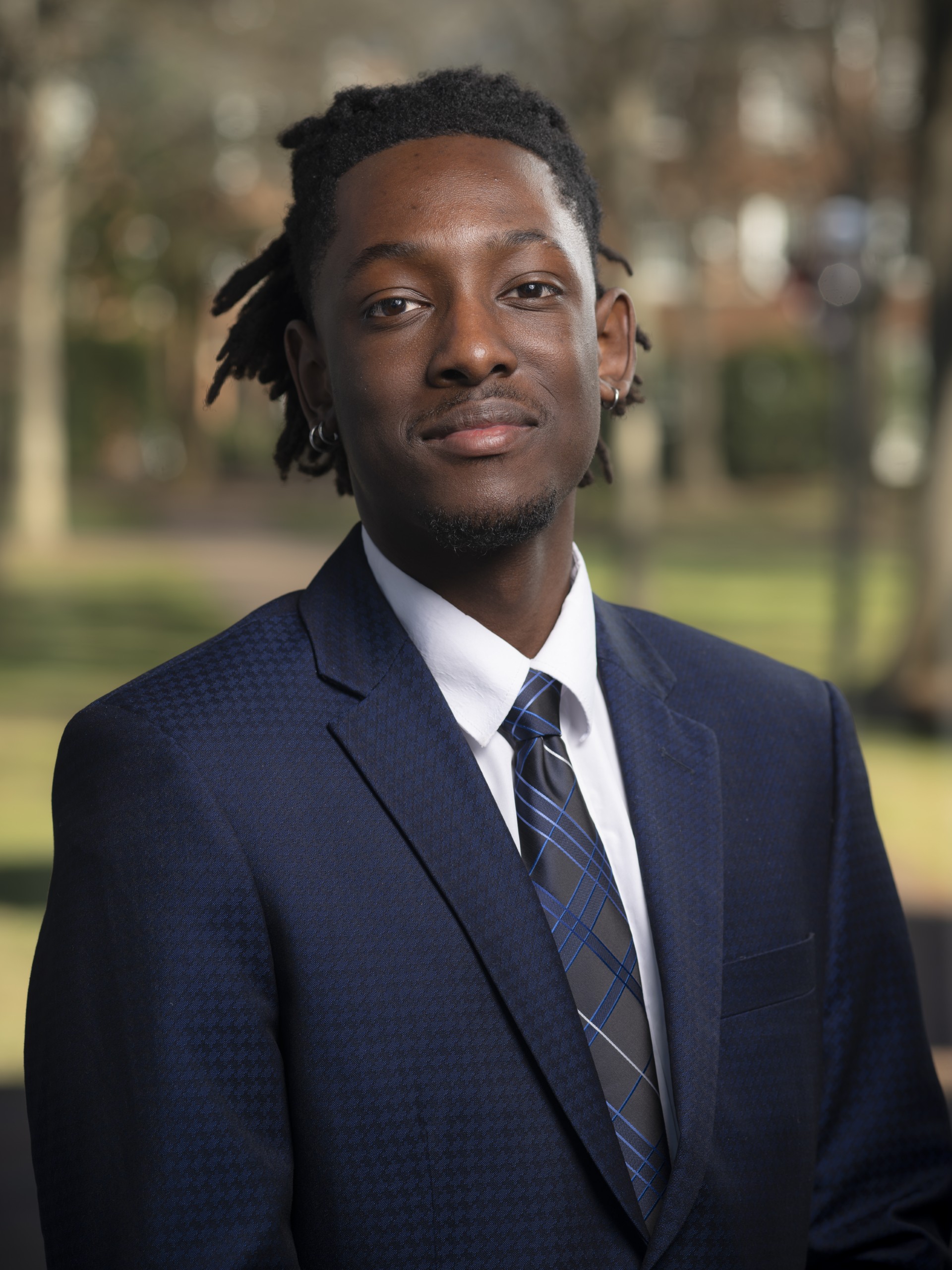
Written by Joshua Mason
CEO & Founder, FaithlineAI
Joshua designs and ships AI products end to end: Pulse, an AI-native operating system for small agencies, iOS apps live on the App Store, and kiosk software running in retail stores. His work won the Elon University Innovation Challenge, finished runner up at the Techstars Startup Accelerator, and he has trained over 100 people through FaithlineAI's AI workshops.