AI for Website Conversion Optimization: How Small Agencies Turn More Visitors into Leads
Drafted with AI assistance and reviewed before publishing.
AI gives small B2B agencies a practical way to improve website conversion rates without hiring a dedicated CRO specialist or running months of A/B tests. By combining AI copy analysis, behavioral insight tools, and structured rewriting prompts, a two-to-ten-person agency can identify why visitors leave without contacting you, fix the most damaging problems in a day or two, and systematically improve the percentage of visitors who become leads over time.
Most small agency websites convert fewer than 2% of visitors into leads, according to First Page Sage's B2B conversion rate benchmarks. That means for every 100 people who find your website, 98 leave without booking a call or filling out a form. AI-assisted optimization is how you close that gap without a full agency retainer or a developer on speed dial.
What Is Website Conversion Rate Optimization for Small Agencies?
Conversion rate optimization (CRO) is the process of increasing the percentage of website visitors who take a desired action: booking a discovery call, filling out a contact form, downloading a lead magnet, or signing up for a newsletter. For a small B2B agency, the primary conversion goal is almost always getting a qualified prospect to start a conversation.
Traditional CRO relies on large volumes of traffic, dedicated testing software, and months of data. AI changes the equation. You do not need 10,000 monthly visitors to do meaningful optimization. AI can analyze your pages qualitatively, spot structural and copy-level problems, and generate better-performing alternatives based on established conversion principles, even before you have enough traffic to run a statistically valid split test.
According to HubSpot's CRO guide, even small improvements in conversion rate compound significantly: raising your contact page from 2% to 4% doubles the leads your current traffic generates, with no additional spend on ads or content.
Which Pages Should Small Agencies Optimize First?
Not all pages are worth optimizing equally. The highest-leverage pages are the ones that already receive the most traffic and sit closest to the conversion event.
| Page | Why it matters | Primary AI fix |
|---|---|---|
| Homepage | First impression for most organic and referral traffic; sets context for the entire site | Rewrite the headline and above-the-fold copy to immediately answer "what do you do and who is it for" |
| Main service page | Where evaluation-stage visitors go to decide whether to contact you | Add proof elements, rewrite benefit statements, strengthen the CTA |
| Contact or booking page | Directly controls conversion rate; friction here drops leads even when everything else is working | Reduce form fields, add reassurance copy, rewrite button text from "Submit" to something specific |
| Blog posts with high traffic | Informational visitors who are ready to learn but not yet ready to buy; often the highest-volume pages | Add contextual inline CTAs, improve the offer at the end of each post |
| Pricing or packages page | Visited by warm leads comparing options; high intent but often undersupported | Rewrite anchoring copy, add FAQ-style objection handling, clarify what each tier includes |
Start with whichever page already gets the most visitors and has a clear conversion action attached to it. For most small agencies, that is either the homepage or the main service page. Improving those two pages first gives you the fastest return on your optimization time.
How Does AI Identify What Is Hurting Your Conversion Rate?
AI-assisted CRO starts with a structured audit of your existing pages. You paste your current page copy into an AI assistant and ask it to evaluate the page against a conversion checklist: clarity of the headline, specificity of the value proposition, strength and placement of calls to action, proof elements, objection handling, and friction in the form or booking flow.
A well-constructed prompt produces a specific list of conversion problems, ranked by likely impact. Common findings for small agency pages include:
- Headlines that describe the agency rather than the outcome the client gets
- Value propositions that use industry jargon instead of language buyers actually use
- CTAs buried below the fold with generic text like "Learn More" or "Contact Us"
- Missing social proof: no client logos, results, testimonials, or case study links near the CTA
- Contact forms with six or more fields when three to four are enough to qualify a lead
- No clear next-step framing: visitors do not know what happens after they submit the form
Once you have a list of problems, AI can generate alternative headlines, rewritten benefit statements, new CTA copy, and objection-handling text for each issue it identified. The output is ready to test immediately, without writing a brief or waiting for a copywriter.
How Do You Run an AI-Assisted Conversion Test Without a Developer?
For small agencies without a developer on staff, the fastest path to conversion testing uses a two-step approach: AI generates the variant, and a no-code tool or your existing website platform runs the test.
Step 1: AI audit and copy generation (2 to 4 hours)
Paste the full copy of your target page into Claude or ChatGPT. Ask it to act as a conversion copywriter and identify the five highest-impact improvements you can make. Then ask it to write three alternative versions of each element it flags: the headline, the primary CTA, and the first paragraph of your value proposition. Save the best variants in a document you can reference during testing.
Step 2: Implement and track (30 to 60 minutes)
For sites on Webflow, WordPress, Squarespace, or Framer, implement the AI-generated copy changes directly in your page editor. Install a free heatmap tool like Microsoft Clarity to see where visitors click, where they stop scrolling, and which page elements they interact with. This gives you behavioral data to evaluate whether the new copy is working before you commit to formal split testing.
Step 3: Formal A/B testing (when traffic allows)
Once you have a clear winning variant from qualitative observation, you can run a formal split test using Google Optimize, VWO, or a built-in testing tool on your platform. AI helps here too: prompt it to write a test hypothesis for each change, define what a winning result looks like, and calculate how many visitors you need before the result is statistically meaningful.
An important note on traffic thresholds: most formal A/B tests require at least 250 to 500 conversions per variant to reach statistical confidence. If your contact page gets 500 visitors per month and currently converts at 2%, you are generating around 10 conversions per month, which means a formal test would take six months or more per variable. For low-traffic sites, the AI qualitative pass plus heatmap observation is the right approach.
Which AI and CRO Tools Work Best for Small Agencies?
The right tool stack depends on your budget and technical setup. Here is how the main categories compare for a small agency without a dedicated marketing team:
| Tool | Best for | Cost |
|---|---|---|
| Claude or ChatGPT | Copy audits, headline generation, CTA rewrites, objection-handling scripts | Free to $20/mo |
| Microsoft Clarity | Heatmaps, session recordings, scroll depth tracking, click maps | Free |
| Google Analytics 4 | Page-level traffic, bounce rate, goal tracking, traffic source attribution | Free |
| VWO or Optimizely | Formal A/B testing with statistical significance tracking | $200+/mo; overkill for low-traffic sites |
| Hotjar | Heatmaps plus on-site surveys to ask visitors why they left or did not convert | Free to $99/mo |
| Unbounce or Instapage | Dedicated landing pages with built-in A/B testing; good for paid traffic campaigns | $79+/mo |
For most small agencies, the right starting stack is Claude or ChatGPT for copy work, Microsoft Clarity for behavioral observation, and Google Analytics 4 for traffic and conversion tracking. These three tools together are completely free and give you everything you need to identify problems, generate fixes, and measure whether they worked. Paid testing tools make sense once your site reaches the traffic volume where formal split testing becomes practical.
How Does Conversion Optimization Connect to the Rest of Your Growth Stack?
Website conversion rate is the multiplier on everything else you do to drive traffic. Better SEO, more LinkedIn content, a stronger referral program, and a more active outbound outreach effort all produce more leads when your website converts visitors effectively. An optimized website makes every other growth investment more efficient.
The relationship runs in both directions. AI-assisted SEO work brings in visitors who are searching for exactly what you offer, which raises the baseline quality of traffic your CRO work is converting. Higher-quality traffic converts at higher rates with less friction on the page itself. An AI-assisted lead generation system that drives qualified prospects to specific landing pages built around their search intent will outperform a generic homepage by a factor of three to five in most cases.
For agencies using outbound video outreach alongside inbound content, Pulse, FaithlineAI's AI sales platform, generates personalized video scripts daily. When outreach links to a dedicated landing page optimized for a specific prospect segment rather than your generic homepage, the conversion rate on those inbound visits improves significantly. Outbound gets them to click; CRO gets them to book.
If you want to go further, an AI chatbot or conversational booking flow on your website can capture leads from visitors who are interested but not quite ready to fill out a form. Our AI agents and chatbots service is built specifically for this use case: a qualifying conversation that turns browsers into booked calls, running 24 hours a day without a human in the loop.
What Are the Highest-Impact Copy Changes AI Helps Small Agencies Make?
Not all copy changes are equal. These five produce the most consistent lift for small B2B agency websites:
- Rewrite the homepage headline to name the outcome, not the agency. Instead of "Digital Solutions for Growing Businesses," try "We Build AI Systems That Cut Your Admin Work in Half." AI can generate a dozen specific, outcome-focused headline options in two minutes.
- Replace the generic contact CTA with a specific one. "Get In Touch" tells the visitor nothing about what happens next. "Book a Free 30-Minute Discovery Call" sets clear expectations. AI can A/B test the framing.
- Add proof close to the CTA. A client logo row, a single specific testimonial, or a short result statement placed directly above or beside your contact form consistently raises completion rates.
- Cut the contact form in half. If you are asking for name, email, phone, company, company size, service interest, and "how did you find us," you are asking too much. AI can help you decide which three to four fields actually qualify a lead and eliminate the rest.
- Add a "what happens next" paragraph below the form. Visitors are more likely to submit when they know what happens after they click. "We will review your submission and follow up within one business day to schedule your discovery call" reduces uncertainty and increases completions.
Frequently Asked Questions
What is a good conversion rate for a small B2B agency website?
For a B2B professional services or agency website, a conversion rate between 2% and 5% on your main lead-capture page is a reasonable benchmark. Pages with very targeted traffic and a single focused call to action can reach 8% to 12%. According to First Page Sage's B2B conversion benchmarks, the average across most B2B industries sits around 1.7% to 2%, so hitting 3% or higher on a contact or booking page typically means your copy and offer are working well.
Can AI improve website conversions without running A/B tests?
Yes. AI can analyze your current copy, identify structural weaknesses, and rewrite headlines, CTAs, and body text based on conversion principles without needing live test traffic. This qualitative pass often delivers improvement faster than a formal split test, especially for sites with under 2,000 monthly visitors where statistical significance takes months to accumulate. Pair AI copy rewrites with a free heatmap tool like Microsoft Clarity to observe behavioral changes after you publish.
How long does it take to see results from AI-assisted CRO?
For high-priority pages like your homepage or main service page, you can implement AI-generated improvements in a day or two and see directional results within 30 to 60 days. For formal A/B tests, you need enough traffic to reach statistical confidence, which at low-traffic sites can take 60 to 90 days per test. Starting with the pages that already get the most visits gives you the fastest feedback cycle.
What is the most common reason small agency websites have low conversion rates?
The most common reason is a mismatch between what the visitor expects based on where they came from and what the page actually says. A visitor who clicked on a LinkedIn post about AI for agencies and arrives at a generic homepage about "digital solutions" loses context immediately. AI can audit message-match across your traffic sources and rewrite pages to speak directly to each visitor segment.
Do small agencies need a developer to use AI for website optimization?
No. Most high-value CRO work, including copy analysis, headline rewrites, CTA improvements, and form simplification, requires no code changes at all. For sites built on Webflow, WordPress, Squarespace, or Framer, you can implement most AI-generated copy recommendations directly through the platform editor. A developer is only needed for more advanced changes like personalization scripts or behavioral trigger popups, both of which are optional starting points.
Where to Start
The single highest-return action most small agency websites can take today is a one-hour AI copy audit of the homepage and main service page. Paste each page into an AI assistant, ask it to identify the top five conversion problems, and ask it to write better alternatives for each one. Then implement the changes, install Microsoft Clarity, and watch the session recordings for two to three weeks. That process costs nothing but time and often produces the most visible improvement your website has seen in years.
If you want help beyond the copy audit, our workflow automation service includes the ability to connect your contact form to an automated follow-up sequence, so every lead that converts on your website gets a fast, consistent response that moves them toward a call. And our AI consulting engagements often start with a full website and conversion funnel audit as part of the intake process.
For agencies that also use outbound outreach, Pulse generates daily personalized video scripts that drive prospects to specific landing pages you have optimized for conversion. The combination of a stronger outbound sequence and a higher-converting website is where most small agencies find their next meaningful jump in qualified pipeline.
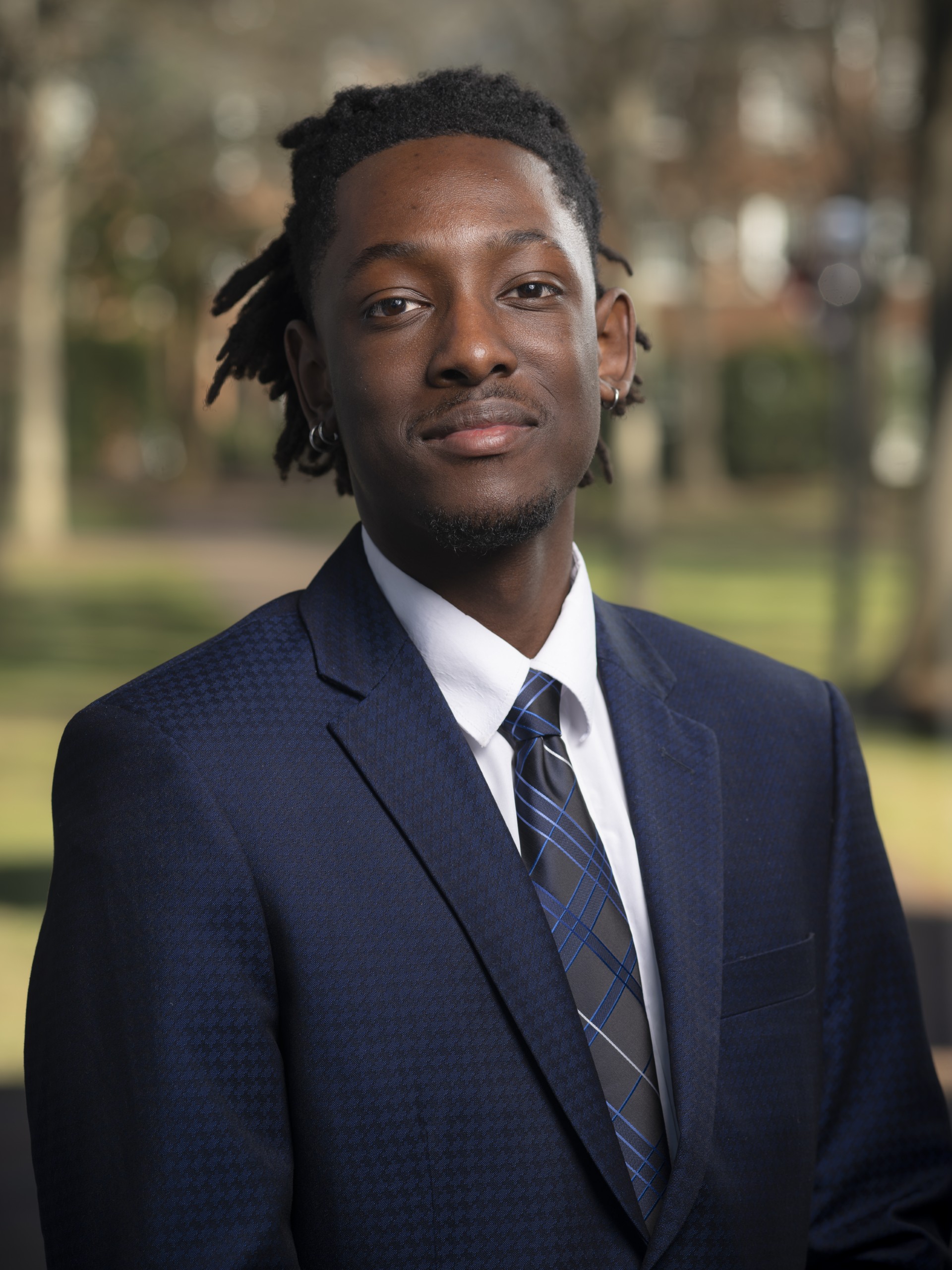
Written by Joshua Mason
CEO & Founder, FaithlineAI
Joshua designs and ships AI products end to end: Pulse, an AI-native operating system for small agencies, iOS apps live on the App Store, and kiosk software running in retail stores. His work won the Elon University Innovation Challenge, finished runner up at the Techstars Startup Accelerator, and he has trained over 100 people through FaithlineAI's AI workshops.